
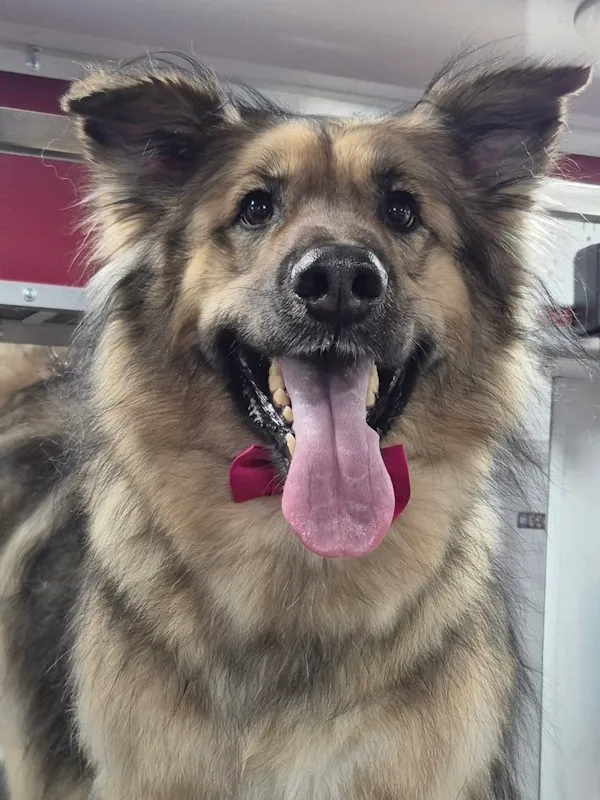
Husky Grooming Basics for Colorado Dogs
A Husky's coat has a soft insulating undercoat and a protective outer layer of guard hairs. The undercoat changes with the seasons and can shed heavily, while the guard hairs help protect the skin from weather and sun.
A complete Husky grooming routine combines regular brushing, seasonal undercoat removal, thorough bathing and drying, nail care, and paw checks. Our guide to coat health and shedding explains how consistent grooming helps prevent packed coat and skin irritation.
Why You Should Never Shave a Husky's Double Coat
A Husky's double coat helps protect the dog from heat, cold, sun, and changing weather. Shaving removes that natural protection, can expose the skin to UV damage, and may change how the coat grows back.
Shaving also does not solve normal shedding. The better approach is a thorough bath, complete rinse, high-velocity drying, and careful undercoat removal that leaves the protective guard hairs intact.
- Use undercoat tools instead of clippers for shedding.
- Book de-shedding around spring and fall coat blowout.
- Avoid shaving unless there is a medical reason from a veterinarian.
- Keep the coat clean, dry, and brushed through.
How often Huskies need grooming
Most Huskies benefit from regular brushing at home and professional baths every 6 to 8 weeks. During spring and fall blowout, daily brushing may be needed.
A professional de-shedding appointment at the start of blowout season can reduce the amount of loose fur and help prevent trapped undercoat from becoming uncomfortable.
Colorado paw and skin care for Huskies
Winter ice melt, summer pavement, rocky trails, and dry air can all affect paw pads. Regular paw checks and nail trims help keep Huskies moving comfortably.
Dry winter air can also cause dull coat and flaky skin. Moisturizing or oatmeal-based pet-safe shampoos can help, but over-bathing can make dryness worse.
Why mobile grooming works well for Huskies
Husky grooming creates a lot of loose fur. Mobile grooming brings the bath, high-velocity dryer, and de-shedding setup to your home, so the loose undercoat stays in the grooming van instead of filling your car.
The one-on-one setup can also be calmer for vocal, energetic, or easily overstimulated Huskies who do not love busy salon environments.
Fur Sure provides mobile dog grooming in Arvada, mobile dog grooming in Thornton, and mobile dog grooming in Denver, with additional service areas across the Denver Metro.
Daily brushing during coat blowout
When a Husky blows coat, loose undercoat can come out in handfuls. During those periods, quick daily brushing can make a major difference. The goal is not to strip the coat aggressively, but to remove loose undercoat before it packs against the skin.
Focus on the ruff, rear legs, hips, chest, and tail. If the brush fills quickly or the coat feels dense and clumpy, a professional bath, high-velocity dry, and deshedding appointment can help move the coat out safely.
Bathing and drying a dense double coat
Huskies need more than a quick surface wash. Water and shampoo must reach the dense undercoat, and the coat needs to be rinsed and dried thoroughly. Damp undercoat can trap odor and irritate the skin.
Professional drying is one of the most valuable parts of Husky grooming. A high-velocity dryer helps separate the coat and remove loose undercoat that brushing alone may miss.
Trail, snow, and paw care for Colorado Huskies
Colorado Huskies often spend time on trails, in snow, and on dry summer paths. Burrs, dust, ice melt, and packed snow can collect around paws and feathering.
Regular paw checks, nail trims, and light paw cleanup can help keep movement comfortable. After hikes or snowy walks, check between toes and around pads for irritation or debris.
Complete Husky Grooming Schedule
Most Huskies benefit from brushing at home several times a week, with more frequent brushing during coat blowout. Professional grooming can be scheduled seasonally or more often if the coat is packed, the dog is active outdoors, or shedding is overwhelming the home.
- Weekly maintenance: brush high-shed areas and check paws.
- During coat blowout: brush more often and consider a professional deshedding appointment.
- After muddy or snowy adventures: check paws, belly, tail, and feathering.
- Year-round: keep nails trimmed and watch for skin dryness.
If home brushing no longer keeps up with the loose undercoat, a mobile Bath and Brush appointment can add thorough washing, high-velocity drying, and professional de-shedding support.
Dry air and Husky skin in Colorado
Colorado's dry air can make skin and coat care more important. A Husky may look clean on the surface while the dense coat holds dust, dead undercoat, or dry skin flakes underneath.
Gentle bathing, complete rinsing, and full drying help keep the coat clean without irritating the skin. If you notice constant scratching, redness, odor, or bald patches, ask your veterinarian for guidance.
After hikes and outdoor adventures
After trail days, check for burrs, foxtails, sap, ticks, and debris. Pay close attention to the tail, belly, behind the ears, and between toes. Dense coat can hide small problems until they become uncomfortable.
A regular grooming routine makes these checks easier because the coat stays cleaner, looser, and easier to separate.
What a professional Husky groom includes
A professional Husky groom usually includes a thorough bath, complete rinse, high-velocity drying, undercoat removal, brush-out, nail care, paw check, and coat review. The drying step is especially important because it loosens undercoat that brushing alone may not reach.
For packed coats, one appointment may not remove every loose hair, but it should make a visible difference in comfort, airflow, and shedding around the home.
How to know your Husky is due for grooming
Your Husky may be due for grooming if the coat releases clumps, the undercoat feels packed, the coat smells even after outdoor dirt is brushed off, or your home is covered in hair despite regular brushing.
Other signs include itchy skin, dull coat, debris trapped in feathering, overgrown nails, or heavy shedding that does not improve with at-home brushing.
Common questions
No. Shaving removes the insulating double coat and can expose the skin to sun damage. De-shedding is the better approach.
Coat blowout is the heavy seasonal shedding of the undercoat, usually in spring and fall.
Many Huskies do well with a professional bath every 6 to 8 weeks, plus de-shedding during blowout season.