
What dog owners can safely do at home
Between appointments, owners can brush, check ears, wipe paws, practice gentle paw handling, and watch for changes in skin or coat. These small habits make professional grooming easier.
At-home maintenance is especially helpful for doodles, long-haired dogs, and heavy shedders because coat problems build gradually.
- Brush in short, calm sessions.
- Check for mats behind ears, under legs, and near the collar.
- Handle paws gently so nail trims feel less unfamiliar.
- Watch for redness, flakes, odor, or licking.
Where professional grooming matters most
Professional groomers have tools and training for coat types that are difficult to manage at home. Proper drying, de-shedding, clipping, sanitary work, and nail trimming require technique and patience.
The risk of DIY grooming rises when a dog is matted, anxious, reactive, elderly, sensitive, or needs a full body haircut.
Why mobile grooming can be the middle ground
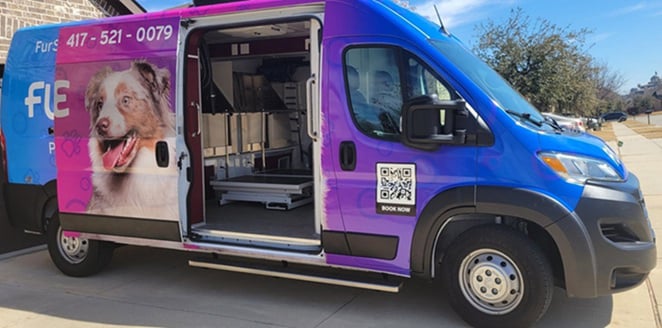
Mobile grooming gives you professional care without the car ride or salon chaos. Your dog gets the benefit of proper tools and handling while staying close to home.
For many families, the best routine is simple: maintain lightly at home, then schedule professional mobile grooming before the coat becomes difficult. The complete mobile dog grooming guide explains how the van-based appointment works, what services are available, and how recurring visits are scheduled.
When to stop DIY and book a groomer
Book professional help if you find mats close to the skin, smell persistent odor, hear nails clicking, notice skin irritation, or feel unsure about trimming safely.
A groomer can also help set a realistic schedule so you are not always trying to catch up after the coat is already uncomfortable.
Tools make a bigger difference than most owners expect
Professional grooming tools are designed to work safely through different coat types. Clippers, blades, dryers, brushes, combs, nail tools, and bathing systems all affect the final result and the dog's comfort.
At-home tools can help with maintenance, but they may not remove packed undercoat, dry dense coats fully, or clip through coat safely when mats are close to the skin. The right tool in experienced hands can prevent pulling, uneven cuts, and skin irritation.
DIY risks with mats, nails, ears, and dryers
The biggest DIY risks usually happen around sensitive areas. Mats can hide close skin contact. Nail quicks can be hard to see. Ears can become irritated if moisture is left behind. Hot dryers or human hair dryers can make dogs uncomfortable or unsafe.
If a task feels uncertain, it is better to stop and ask a groomer. A professional can explain whether the issue is simple maintenance or something that needs a full appointment.
Where at-home care supports professional grooming
DIY care still has an important place. Short brushing sessions, paw checks, wiping feet after walks, and practicing calm handling can make professional grooming easier.
- Brush gently between appointments.
- Handle paws and ears in short, positive moments.
- Keep your dog on a regular grooming schedule.
- Tell your groomer what your dog dislikes before the appointment starts.
How to choose a grooming schedule
The right schedule depends on coat type, haircut length, shedding, activity level, and how much brushing happens at home. Dogs with continuously growing coats often need professional grooming every four to eight weeks. Heavy shedders may need seasonal bath and deshedding appointments.
If your dog is matting, shedding heavily, licking paws, or becoming more resistant to handling, the schedule may need to be adjusted. Regular grooming is usually easier than waiting until the coat is already uncomfortable.
The value of professional eyes on the coat
A professional groomer is not only washing and trimming. They are also reading coat condition, skin comfort, nail length, ear cleanliness, matting risk, and how the dog responds to handling. That experience helps prevent small issues from becoming bigger ones.
Owners may see a fluffy coat and think it is fine, while a groomer may feel tight tangles near the skin. Owners may hear clicking nails, while a groomer may notice the quick has grown forward and needs a gradual trim schedule.
When DIY grooming is enough
At-home grooming can be enough for simple maintenance between appointments. Wiping paws, brushing a short coat, practicing paw handling, and keeping an eye on ears and skin can all support your dog's comfort.
DIY becomes less ideal when the coat is matted, the dog needs a full body haircut, nails are overgrown, the dog is fearful, or the skin is irritated. In those moments, professional grooming is usually safer and less stressful.
Cost versus value in dog grooming
Professional grooming costs more than doing everything at home, but the value is in the training, tools, safety, time, and finished result. For many families, the right comparison is not only price. It is whether the dog is comfortable, whether the coat is maintained correctly, and whether the owner can keep up with the routine.
Mobile grooming adds convenience and a calmer environment, which can be especially valuable for anxious dogs, senior dogs, busy families, and dogs who need consistent coat care.
Common questions
Some maintenance can be done at home, but full haircuts, matted coats, nail trims, and heavy de-shedding are often safer with a professional.
Yes. Fur Sure provides professional mobile grooming from a self-contained van with proper tools, products, and one-on-one handling.
Brush regularly, check paws and ears, watch for mats, and keep nail trim appointments on schedule.