
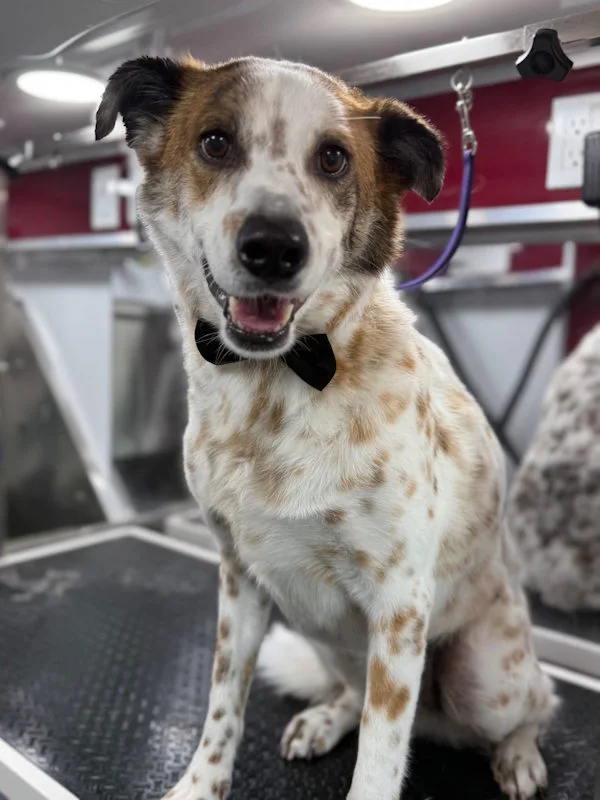
Why grooming needs change as dogs age
Senior dogs may develop arthritis, stiffness, vision changes, hearing loss, sensitive skin, lumps, reduced stamina, or anxiety in unfamiliar environments.
These changes can make grooming more physically and emotionally demanding. A dog who seems stubborn may actually be tired, sore, confused, or overwhelmed.
- Difficulty standing for long periods.
- Sensitivity around joints, skin, or paws.
- Less tolerance for noise and busy spaces.
- More need for breaks and gentle handling.
Why traditional salons can be hard on older dogs
Salon grooming may involve car rides, check-in, waiting, kennel time, slippery floors, other dogs, and multiple transitions. Those details can be exhausting for older dogs.
The longer a senior dog waits before or after grooming, the more tired and stressed they may become.
What senior-friendly grooming should include
Senior-friendly grooming prioritizes patience over speed. The groomer should communicate clearly, take breaks when needed, watch mobility, and avoid pushing a dog past what is safe.
Skin and coat handling also need extra care. Older dogs may have thinner skin, bumps, or sensitive spots that require slower brushing, clipping, and drying.
How mobile grooming supports senior dogs
Mobile grooming keeps the appointment close to home and one-on-one. There is no salon queue, no kennel wait, and no exposure to unfamiliar dogs.
For many senior dogs, that simpler routine makes grooming safer, calmer, and easier to repeat on a healthy schedule. The complete mobile dog grooming guide covers the at-home process, services, pricing, appointment day, and recurring availability.
Senior skin, lumps, and gentle handling
Senior dogs often have thinner skin, lumps, sensitive joints, and changes in coat texture. Grooming should be careful around those changes. A groomer should move slowly, note new areas of concern, and avoid unnecessary pressure.
Owners should share any known lumps, sore spots, medications, seizures, heart concerns, or veterinary instructions before the appointment. The more the groomer knows, the safer the groom can be.
Mobility support during grooming
Older dogs may struggle with standing for long periods, turning, stepping into equipment, or balancing on slick surfaces. Senior-friendly grooming should account for that from the beginning.
That may mean extra support, slower transitions, shorter standing periods, or adjusting the style to reduce appointment strain. Comfort should matter as much as the finished look.
When shorter appointments are kinder
For some senior dogs, the best groom is not the most elaborate groom. A practical trim, simpler finish, or comfort-focused service can be kinder than asking an older dog to tolerate a long appointment.
If a senior dog becomes tired, sore, or stressed, it may be better to simplify the plan. Grooming should help the dog feel cleaner and more comfortable, not leave them exhausted.
Questions to ask before booking a senior dog groomer
Before booking a senior dog, ask how the groomer handles mobility concerns, anxiety, blind dogs, medical notes, and dogs who need breaks. Also ask whether the appointment can be adjusted if the dog becomes tired.
- Can the groom be shortened for comfort?
- How are lumps, fragile skin, and sore joints handled?
- Will the dog wait with other dogs?
- What should I share before the visit?
How regular grooming prevents bigger senior dog problems
Regular grooming can prevent small issues from becoming harder on an older dog. Long nails, packed paw hair, mats, dirty ears, and overgrown sanitary areas can all affect comfort.
A consistent mobile grooming routine keeps senior care more manageable. It also gives the groomer a chance to notice changes and remind the family when something may need veterinary attention.
A realistic grooming goal for older dogs
For senior dogs, the goal is comfort first. A perfect style is less important than clean skin, trimmed nails, clear sanitary areas, comfortable paws, and a coat that does not pull or trap dirt.
That may mean choosing a shorter, easier haircut or maintaining a practical bath and brush schedule. The best senior grooming plan is the one the dog can tolerate safely and repeat consistently.
Grooming blind or low-vision senior dogs
Blind dogs and low-vision senior dogs can do very well with grooming when the environment is predictable. Sudden handling, loud noises, and unfamiliar dogs can be more stressful when the dog cannot see what is happening.
A one-on-one mobile setup helps because the dog is in a quieter space with fewer surprises. Slow introductions, verbal reassurance, and consistent handling can make the appointment feel safer.
A senior-friendly grooming example
Imagine a 17-year-old blind dog who has become nervous at traditional appointments. A senior-friendly mobile groom would avoid rushing, keep the environment quiet, introduce touch carefully, and focus first on the hygiene tasks that protect comfort.
That kind of approach can help older dogs who have started to dread grooming. It does not turn grooming into a spa day for every dog, but it can make the experience more predictable and less frightening.
Signs a senior groom should pause or change
A senior dog may need a break or modified groom if they begin trembling, collapsing, breathing heavily, leaning, repeatedly sitting, showing pain, or becoming unusually distressed. Those signs should not be ignored.
Sometimes the right choice is to finish the most important hygiene work and save cosmetic detail for another day. With older dogs, kindness and safety should lead the appointment.
Senior dog grooming across Denver Metro
Mobile grooming is especially helpful for senior dogs across Denver, Westminster, Arvada, Broomfield, Thornton, Northglenn, Boulder, Longmont, and Wheat Ridge because it removes the travel and waiting that can wear older dogs out.
Families can keep grooming more consistent without asking their senior dog to handle a busy salon day. That consistency helps with nails, paw pads, coat comfort, sanitary areas, and skin checks.
Common questions
Often, yes. It removes many stressors older dogs tolerate poorly, including travel, long waits, kennels, and busy salon spaces.
Yes. Breaks, gentle handling, and realistic expectations are important parts of senior-friendly grooming.
It depends on coat type and comfort needs, but many senior dogs do best with a consistent schedule that prevents mats and long overdue appointments.