
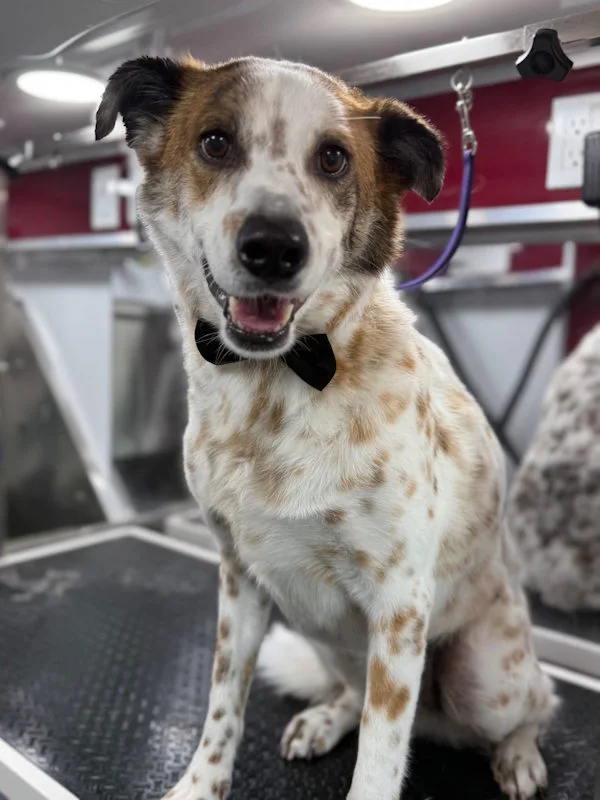
Why traditional salons can overwhelm anxious dogs
A nervous dog may already be stressed before the appointment starts. The car ride, lobby, other dogs, and new smells can stack stress quickly.
Once a dog is over threshold, even normal grooming tasks can feel scary. Brushing, drying, nail trimming, and handling become harder because the dog is trying to escape the experience.
- Barking or whining in shared spaces.
- Kennel time before or after the groom.
- Multiple handlers or rushed transitions.
- Loud dryers and unfamiliar equipment.
How mobile grooming lowers the pressure
Mobile grooming removes many of the triggers before they start. Your dog walks from home to the van, works with one groomer, and returns home when the appointment is done.
The Fur Sure approach is calm, direct, and one-on-one. We use patient handling, breaks when needed, and clear communication with the owner. The complete mobile dog grooming guide explains the full at-home process, service choices, pricing, and recurring appointments.
Signs your dog may need a calmer grooming plan
Dogs show grooming stress in different ways. Some shake or hide. Others pant, freeze, mouth, pull away, bark, or become reactive during specific steps.
These signs should not be ignored or punished. They are information. A better grooming plan can reduce pressure and help the dog feel safer over time.
What owners can do before the appointment
Tell your groomer what your dog struggles with. Paws, face, ears, dryers, brushing, or being lifted can all require different handling. The more we know, the better we can plan.
For dogs with severe anxiety, ask your veterinarian whether a calming plan is appropriate. Shorter, more frequent visits may also be better than waiting until the coat is overdue.
Behavior is communication, not bad manners
When a dog trembles, freezes, pulls away, growls, or tries to escape during grooming, they are communicating discomfort. That does not mean the dog is bad. It means something about the process feels unsafe, painful, confusing, or overwhelming.
A calmer grooming plan starts by taking those signals seriously. The goal is to reduce pressure, avoid flooding the dog with too much at once, and build trust through predictable handling.
Common grooming triggers for nervous dogs
Grooming includes many sensations that dogs may not experience anywhere else. Water, dryers, nail tools, face handling, paw handling, clippers, slick surfaces, and unfamiliar sounds can all trigger anxiety.
- Dogs with previous bad grooming experiences may anticipate discomfort.
- Senior dogs may resist because standing hurts.
- Blind dogs may startle if touched without warning.
- Matted dogs may react because brushing or clipping pulls on sore skin.
How a consistent groomer builds trust
Trust grows when the dog learns what to expect. A consistent groomer can remember handling preferences, sensitive areas, coat history, and what helped during the last appointment.
That familiarity is especially helpful for anxious, reactive, senior, or special needs dogs. Each calm appointment becomes a reference point for the next one, and over time many dogs become easier to handle.
When to split grooming into smaller sessions
Some dogs cannot comfortably complete every grooming task in one visit. For those dogs, pushing harder is not always the right answer. A shorter appointment, simplified haircut, nail-focused visit, or gradual conditioning plan may be kinder.
If your dog has severe grooming anxiety, be honest when booking. The groomer can recommend whether to start with a smaller goal and build from there.
How owners can help after the appointment
What happens after grooming can shape the next visit. Give your dog a calm return home, water, a potty break, and time to decompress. Avoid immediately overwhelming them with excitement if they seem tired.
If your groomer shares notes about paw sensitivity, matting, dryer fear, or face handling, use those notes for simple practice at home. Short, positive moments can help your dog feel more prepared next time.
Why pain can look like behavior
Sometimes a dog who seems difficult is actually uncomfortable. Arthritis, skin irritation, ear pain, dental pain, sore paws, tight mats, or long nails can all make grooming harder.
If behavior changes suddenly, or your dog reacts strongly to a specific body area, it may be worth a veterinary check. Grooming should not force a dog through pain.
Building a grooming plan for reactive dogs
Reactive dogs often need a plan, not a single perfect appointment. The first goal may be completing the most important hygiene tasks safely. Over time, as trust grows, the groomer may be able to add more detail.
Mobile grooming can support that plan because the environment is quieter and more predictable. There are fewer triggers, fewer transitions, and less exposure to other dogs.
What a calmer groomer does differently
A calmer groomer watches the dog throughout the appointment. They notice body tension, lip licking, panting, freezing, pulling away, and other signals that the dog is reaching their limit.
That does not mean every task is optional, but it does mean the groom should be handled thoughtfully. The groomer may change the order of tasks, give the dog a moment to reset, simplify the haircut, or focus on hygiene first when the dog is struggling.
Grooming frequency and trust building
Dogs who wait too long between appointments often arrive with more coat problems, longer nails, more tangles, and more discomfort. That can make grooming feel harder and reinforce fear.
A predictable schedule can build trust. The dog learns the process, the groomer learns the dog, and the appointment does not have to solve months of coat care in one visit. For anxious dogs, consistency is often kinder than occasional big grooms.
What not to do before an anxious dog groom
Do not surprise the groomer with a bite history, medical concern, or severe trigger at the door. Do not overexercise a senior or anxious dog to the point of exhaustion. Do not give calming medication unless it was prescribed and discussed with your veterinarian.
The best preparation is simple: share the truth, keep the routine calm, give your dog a potty break, and let the groomer know what has helped or hurt during past appointments.
Common questions
Often, yes. It removes many salon triggers and gives the dog one-on-one care in a quieter setting.
If a dog cannot safely continue, we stop and talk through the next best step. Safety comes first.
Many dogs do better with a consistent groomer and predictable schedule, especially when appointments happen before the coat becomes difficult.