

How does dog grooming change by breed?
Dog grooming by breed starts with coat type. Short, smooth coats usually need bathing, brushing, nail care, and help removing loose hair; long or curly coats need more frequent brushing and may require scheduled haircuts; dense double coats need thorough drying and seasonal undercoat removal rather than routine shaving. Breed, coat condition, age, activity, health, behavior, and home maintenance all influence the final plan.
Why coat type matters as much as breed name
A breed name is a useful starting point, but it does not describe every coat. Dogs within the same breed can have different density, texture, length, and matting tendencies. Mixed breeds and doodle-type dogs may combine traits from more than one coat family.
Hair and fur also follow growth and shedding cycles. Some coats have a longer active growth phase and can become very long without trimming. Others release loose coat seasonally. Looking at how the individual coat grows, sheds, tangles, and responds to brushing leads to a more useful plan than relying on a label alone.
Start by asking four questions: Does the coat shed? Can a comb reach the skin? Does the hair continue getting longer between appointments? Is there a dense undercoat beneath the outer hair? Those answers help determine whether the dog primarily needs coat release, mat prevention, haircut maintenance, or a combination.
Dog coat families at a glance
This table is a practical starting point. Individual dogs may not fit neatly into one group, and coat condition can change what is safe or realistic during an appointment.
| Coat family | Breed examples | Usual grooming priorities |
|---|---|---|
| Short and smooth | Ridgeback, Beagle, Boxer | Bathing, gentle brushing, nail care, seasonal loose-hair removal |
| Long and flowing | Maltese, Yorkshire Terrier, Afghan Hound | Frequent brushing and combing, mat prevention, face and paw care, trims |
| Curly or wavy haircut coat | Poodle, Bichon Frise, many doodles | Skin-level brushing, regular bathing and drying, scheduled haircuts |
| Dense double coat | Husky, Golden Retriever, Australian Shepherd | Undercoat brushing, thorough drying, seasonal deshedding, no routine body shave |
| Wire coat | Many terriers and Schnauzers | Coat-specific brushing and trimming; technique depends on texture and desired finish |
| Mixed or combination coat | Mixed breeds and crossbreeds | Individual assessment of density, shedding, matting, growth, and maintenance |
Short and smooth coats still need a routine
A short coat may be easier to brush, but it still collects dirt, releases loose hair, and needs nail, ear, and paw care. Beagles, Boxers, Ridgebacks, Bulldogs, and similar breeds can shed enough short, stiff hair to work into furniture and clothing.
Some short-coated dogs have an undercoat and benefit from seasonal deshedding. Others have a thin single coat that calls for gentler tools and less pressure. A rubber grooming mitt, soft brush, or coat-appropriate shedding tool can help, but repeated hard scraping can irritate the skin.
A professional Bath & Brush appointment can combine bathing, drying, brushing, nail care, and optional deshedding when it suits the coat.

Long and flowing coats need consistent brushing
Long, fine coats tangle where hair rubs against collars, harnesses, clothing, legs, ears, and the body. A few focused brushing sessions during the week are usually more useful than waiting for one long session after tangles have tightened. Floor-length coats may need daily brushing and combing.
Brush in small sections and follow with a metal comb to confirm that you reached the skin. If the comb catches, the area needs more attention. Do not cut blindly beneath a mat; loose skin can be pulled into the tangle.
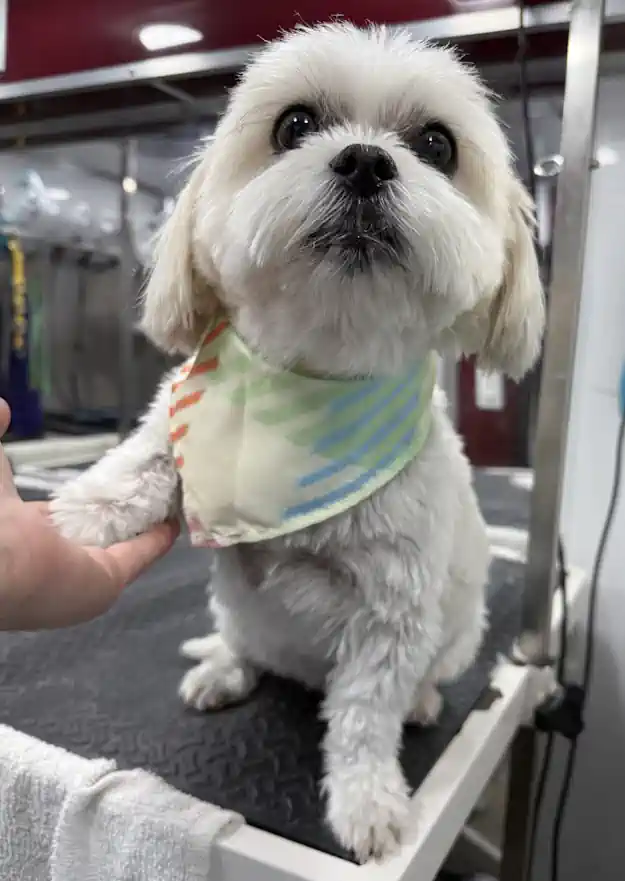
Maltese dogs are a useful example of how coat length changes home care and haircut frequency. The Maltese grooming guide compares puppy cuts, teddy bear styles, longer coats, brushing, bathing, and mat prevention.
Curly and wavy haircut coats can mat close to the skin
Poodles, Bichon Frises, and many doodle-type dogs can hold loose hair within the coat instead of dropping it freely. Surface brushing may make the top look fluffy while tangles remain closer to the skin. A brush-and-comb routine must reach through the full coat.
Haircut length and home care are connected. A fuller teddy-bear style needs more brushing than a shorter practical trim. A customer may prefer a long, fluffy finish, but a shorter haircut can be more comfortable when the coat is already tangled or the family wants a routine they can maintain between visits.
A Full Groom & Haircut includes bathing, drying, brushing, nail care, and coat-appropriate clipping or scissoring. The current coat condition determines which lengths and finishes are safely achievable.
Dense double coats need undercoat care, not routine shaving
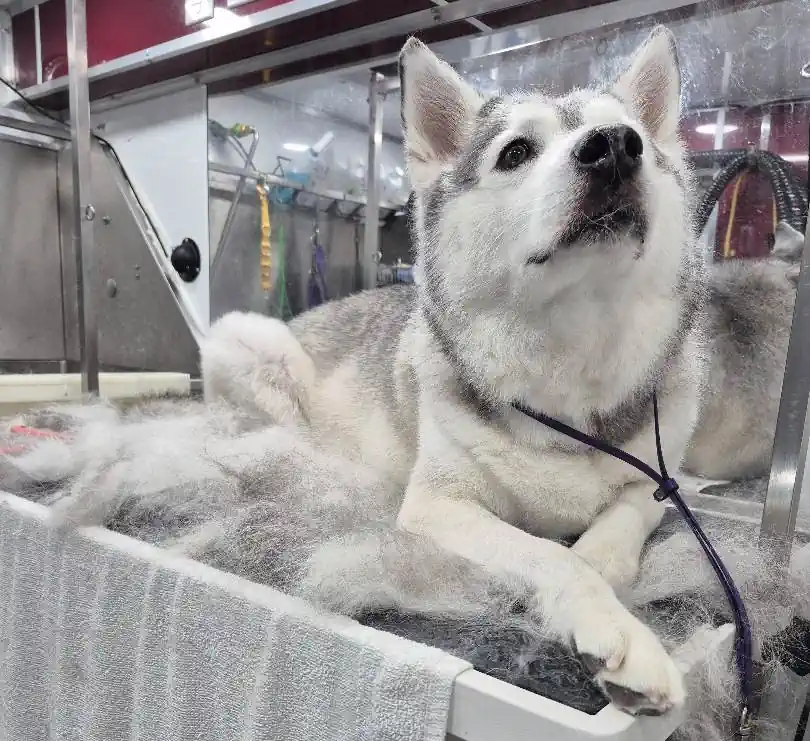
Double-coated breeds have a softer undercoat beneath longer protective guard hairs. Huskies, Golden Retrievers, Australian Shepherds, and similar dogs may release large amounts of undercoat during seasonal coat changes.
Bathing, thorough drying, brushing, and optional deshedding help move loose undercoat without cutting away the protective outer coat. Routine body shaving is usually unnecessary for a healthy double coat. Medical needs, severe matting, or another exceptional coat condition should be discussed with an appropriate veterinarian or experienced groomer.
For a detailed double-coat routine, see the Husky grooming guide, including coat blowout, tools, bathing, drying, and seasonal deshedding.
Wire, corded, and mixed coats need individual plans
Wire coats can be maintained in different ways depending on texture, breed tradition, the desired finish, and the services a groomer offers. Before booking, ask whether the planned service uses clipping or another technique and how that choice may affect texture and upkeep.
Corded breeds such as Pulis and Komondors do not follow an ordinary brushing routine. Their coats require careful separation, bathing, rinsing, and extensive drying. Owners should seek a professional with relevant corded-coat experience.
Mixed breeds can inherit almost any combination of density, wave, curl, undercoat, and shedding. Doodle-type coats are especially variable. Plan from the actual coat: how easily it mats, whether a comb reaches the skin, how much it sheds, and how long the family wants to maintain it.
How often should different coat types be groomed?
These ranges are planning guides, not universal rules. Schedule sooner when mats form, nails become long, shedding becomes difficult to manage, the coat stays dirty, or home brushing cannot reach the skin.
| Coat type | Home routine | Professional starting point |
|---|---|---|
| Short and smooth | Brief weekly brushing; more during seasonal shedding | Often every 4–8 weeks or when bathing and shedding require help |
| Long and flowing | Several times weekly; daily for long or mat-prone coats | Often every 4–8 weeks, adjusted to length and condition |
| Curly or wavy haircut coat | Brush and comb to the skin several times weekly or more | Often every 4–8 weeks, based on style and growth |
| Dense double coat | Regular brushing; more frequent during coat blowout | Often every 4–8 weeks with seasonal deshedding as needed |
| Wire, corded, or mixed | Technique varies with the individual coat | Set after a coat and maintenance assessment |
Regular grooming supports coat condition, mat prevention, shedding control, and early awareness of changes that may need veterinary attention. Learn more about dog grooming and coat health.
How coat type helps you choose a grooming service
Choose a service by the work the coat needs rather than the breed name alone.
- Bath & Brush: suitable for many short, shedding, double-coated, and maintenance coats that do not need a full-body haircut.
- Full Groom & Haircut: suitable for haircut breeds and coats that need clipping or scissoring in addition to bathing, drying, brushing, and nail care.
- Nail Trim & Paw Care: useful between larger grooming appointments when nails need attention sooner than the coat.
- Optional deshedding: added when the coat type and current shedding make extra undercoat removal appropriate.
If the difference is unclear, compare a dog haircut with Bath & Brush grooming before booking.
What breed-specific grooming looks like in a mobile van
Fur Sure provides one-on-one, cage-free mobile dog grooming in designated Denver Metro communities. A private appointment allows the groomer to focus on one dog's coat, handling preferences, age, and comfort without kennel waiting or a shared salon environment.
The coat plan still changes by dog. A thin short coat needs gentle tools. A dense double coat needs enough time for drying and undercoat work. A long or curly coat may need a shorter finish when matting limits the requested style. That professional judgment matters more than applying the same package to every breed.
Read how professional mobile dog grooming works, or learn about Fur Sure's approach to grooming nervous and anxious dogs.
Build a grooming routine for the dog in front of you
Start with a manageable home routine: use coat-appropriate tools, work in short sessions, check friction areas, and stop before brushing becomes forceful. Watch for tangles, compacted undercoat, damp areas, nail growth, odor, redness, discharge, pain, or sudden sensitivity.
Persistent skin changes, pain, strong odor, sores, or unusual hair loss need veterinary guidance. Grooming can help maintain a clean, manageable coat, but it does not diagnose or treat medical conditions.
Dog grooming by breed is most useful when it leads to an individual plan. The best schedule is the one that keeps the coat combable, the nails maintained, and appointments predictable. A Greyhound, a Maltese, a Poodle, and a Husky should not be placed on identical routines simply because they are all dogs.
Dog grooming by breed FAQs
Every dog needs routine coat, skin, paw, ear, and nail care, but not every dog needs the same professional service. Short, smooth coats may need periodic Bath & Brush care, while long, curly, or haircut coats often need more frequent professional maintenance. The right schedule depends on coat type, condition, activity, health, behavior, and home care.
Some short-haired dogs benefit from deshedding, especially when loose hair increases seasonally. Not every short coat has a dense undercoat, so tools and techniques should match the individual dog. Gentle bathing, drying, brushing, and coat release are usually more appropriate than aggressive scraping.
Routine shaving is usually not recommended for a healthy double coat. Bathing, thorough drying, brushing, and deshedding remove loose undercoat while preserving the protective guard coat. Shaving may be necessary for a medical or severe coat-condition reason, but that decision should involve an appropriate veterinarian or experienced groomer.
Many long-haired dogs are professionally groomed every 4–8 weeks, but this is general guidance rather than a fixed rule. Coat length, matting tendency, haircut style, activity, skin condition, behavior, and brushing at home can all shorten or extend the interval.
Start with the coat your mixed-breed dog actually has rather than relying only on breed labels. Look at texture, density, shedding, growth, tangles, and whether the coat can be combed to the skin. Mixed and doodle-type coats can vary widely, so the grooming plan should be based on the individual dog.
A one-on-one mobile appointment can remove common stressors such as a car ride, kennel waiting, unfamiliar dogs, and a busy salon. Tell the groomer about fears, sensitivities, health concerns, and previous grooming experiences before booking so the appointment can be planned around the dog's comfort and safety.